
“Tackling medical inflation requires redesigning incentives and sharing information,” says Dr. Robert Janett
In the series marking 25 years of UCA (Universidade Corporativa da Saúde Suplementar, the corporate university of Brazil's supplementary health sector), the American physician discusses how primary care and continuing ed
Understanding how other countries organize care helps frame the questions raised by Brazil’s challenges. How can professionals who treat the same patient be brought closer together? Which incentives favor quality and efficiency? What kind of training allows a clinician to see the person beyond the test results? The exchange of experiences broadens the repertoire of those who must make these decisions and offers references for developing solutions suited to the country’s reality.
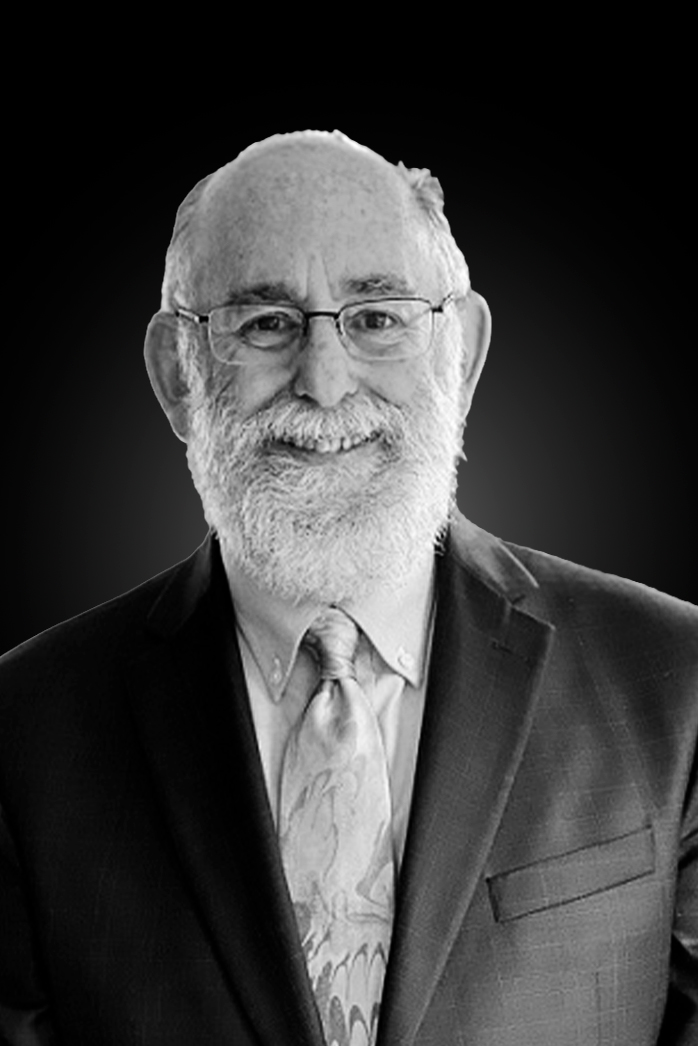
In celebration of its 25th anniversary, UCA (Universidade Corporativa da Saúde Suplementar, the corporate university of the Brazilian Association of Health Plans) challenged experts from different countries to discuss these paths and the role of continuing education in preparing professionals and leaders. In this opening interview, the American physician Dr. Robert (Rob) S. Janett, a primary care specialist and assistant professor at Harvard Medical School, shares reflections from his practice in the United States and from his contact with the Brazilian system.
Saúde Insider – Which lessons from the American model of primary care and accountable care organizations make the most sense for Brazil’s supplementary health sector?
Dr. Robert Janett – Brazil’s supplementary health sector offers easy access to complex care, high-quality hospitals and leading specialists. Even so, it remains highly fragmented: its original design left out primary care and the incentives for providers to coordinate the care of complex patients.
The absence of comprehensive primary care leaves gaps in screening, preventive care, vaccination and other services that prevent disease or allow it to be detected early. Without primary care coordinating services, no one takes responsibility for understanding the full range of a patient’s health needs and their social and psychological challenges.
The predominant fee-for-service payment model rewards complex care and a higher volume of services rather than quality or efficiency.
Together, these factors produce an expensive system, with rapidly rising costs that threaten the sustainability of supplementary health. Avoidable, duplicated or unnecessary laboratory and imaging tests add costs and expose patients to overdiagnosis and to the risks of investigating false-positive results.
Comprehensive primary care gives patients a single point of care capable of resolving 85% to 90% of their problems, often without diagnostic tests. It also provides consistent preventive services, ongoing management of chronic conditions and coordination with specialists and hospitals.
Accountable Care Organizations (ACOs), which are responsible for the care of a defined population, bring different professionals together under a shared contract. Their value-based payment model rewards care coordination, the achievement of quality metrics and efficiency, while discouraging care that does not benefit patients.
Regions of the United States with strong, comprehensive primary care and effective clinical leadership in ACOs achieve better health and financial outcomes.
Saúde Insider – In your conversations with managers and professionals in Brazil, what has struck you most about our system?
Dr. Robert Janett – What strikes me most about the Brazilian health system is its fragmentation. There are few formal structures that allow professionals and facilities to share patient information, leaving patients with the task of coordinating their own care. They gather test results, imaging reports, visit records and other documents and carry them from one provider to another.
This is unsafe and inefficient, particularly for complex patients. I see this situation firsthand in my practice in Boston, where Brazilian patients arrive with stacks of reports from Brazil for me to review during a single visit. In my view, care integration should be one of the main concerns of Brazilian managers and professionals.
I am also struck by cost inflation in supplementary health and by the efforts to contain it. Those efforts are unlikely to succeed without a redesign of the system. Physicians, hospital administrators and health plan managers do the best they can within a model that generates considerable waste.
The difficulty is that one person’s unnecessary spending may be another person’s revenue. A radiologist asked to perform an unnecessary MRI for a simple, uncomplicated headache is following the order of the referring professional. Questioning the test carries the risk of embarrassing that professional and losing future referrals. Everyone is playing the role defined by the current model.
A value-based model, such as an ACO, would work differently. Providers would jointly adopt guidelines for the appropriate use of advanced imaging, drawing on the radiologist’s expertise to help family physicians, internists and neurologists choose the most effective imaging strategy for a given clinical problem.
Tackling medical inflation in Brazil requires redesigning incentives, coordinating provider networks, sharing clinical information and establishing common standards and guidelines for appropriate care.
Saúde Insider – Why is the doctor-patient relationship so important for controlling costs and improving outcomes, and how can professionals be prepared to sustain it?
Dr. Robert Janett – I have had the privilege of observing health systems in several countries. In many of them, including Brazil, technology and testing are increasingly replacing a detailed clinical history and the physical examination. This shift reflects both limited visit time and changes in the culture of care.
However, relying on technology in place of these personal interactions weakens the doctor-patient relationship, reducing trust, warmth and empathy. A strong relationship improves diagnostic accuracy, reduces unnecessary referrals in search of other opinions and evaluations, and helps address the fragmentation of care.
There are no shortcuts to building this bond: trust takes time. Few things matter more than a close, supportive relationship between patients and their physician.
Saúde Insider – What should the training of a good family physician look like, and what gaps do you see in that training in Brazil?
Dr. Robert Janett – I have great respect for the training programs I have visited and for the family physicians I know in the SUS, Brazil’s public health system, and in supplementary health. Primary care training needs to combine clinical competence with an understanding of health system economics, policy, sociology and patient behavior. It should also prepare physicians to promote healthier lifestyles and patient engagement in their own care.
Personal characteristics also contribute to success in primary care. Curiosity is fundamental: physicians should seek to understand their patients’ lives, their social circumstances and their beliefs about their own health and how to improve it. Humility means recognizing the limits of one’s own knowledge. Equally important is respectful collaboration with the multidisciplinary team, because no physician can meet all of a patient’s needs alone.
Training focused exclusively on biomedical and technical skills does not adequately prepare physicians for the challenges of practice today.
Saúde Insider – What is the role of continuing education in the cultural change that must precede the adoption of primary care by health plans and employers?
Dr. Robert Janett – Medical school and residency provide only a small portion of the knowledge we acquire over a career. As science advances, even recent guidelines can become outdated. Continuing education is therefore essential to keep practice aligned with current evidence.
Family physicians also need to keep developing skills beyond biomedicine, including patient communication, palliative care, medical anthropology and care for people with behavioral and substance use disorders. At 73, after more than 40 years of practice, I still attend courses and seminars to sharpen my skills.
Employers and health plans can support continuing education with funding and technical resources. Patients benefit from better care; employers, from a healthier workforce; and health plans, from more effective and efficient care, with fewer unnecessary costs.
Saúde Insider – How can multidisciplinary teams, from nursing to management, be trained to work in an integrated way with specialists?
Dr. Robert Janett – No single professional can meet all of a patient’s needs. That is why effective medical care depends on teamwork. Sharing tasks and drawing on the skills of nutritionists, pharmacists, social workers, physical therapists and other professionals improves care in the practice.
Many of us were trained when medicine resembled golf or tennis, with success resting on the physician’s individual performance. Today, physicians need to learn to lead a team, ensuring that everyone involved in a patient’s care is working toward the same goals.
We use team training and team-building activities to strengthen interdisciplinary communication, working relationships, mutual respect and shared accountability. Brazil needs to expand this kind of training. I see it in the SUS, but rarely in supplementary health. Employers and health plans could support these efforts to improve care delivery in the country.
Saúde Insider – Which quality and outcome indicators should guide training programs, and how can we measure whether training actually changes practice?
Dr. Robert Janett – Quality measurement and improvement are essential and constantly evolving. We cannot improve what we do not measure. For that reason, measuring and reporting results must underpin quality improvement.
ACOs work to improve a defined set of quality indicators. In the United States, several organizations support the development of standardized metrics to evaluate providers and health plans. Some results are public, allowing patients to compare their provider’s performance with regional benchmarks. These measures should be standardized, rather than developed only locally, with the collaboration of government and national professional organizations.
Implementing quality indicators carries risks, and we have learned from past mistakes. Early in our work with the accountable care model, we measured too many parameters, making data collection, reporting and management burdensome and inefficient. The lesson is to concentrate efforts on the areas most in need of improvement.
At the same time, quality improvement must maintain a comprehensive approach rather than being limited to one or two diseases. We assess acute care, chronic disease management, behavioral health, patient satisfaction and the appropriate use of services. We also track efficiency, costs and avoidable care, including hospitalizations for conditions that can be treated in an outpatient setting.
Saúde Insider – What message would you leave for health plan and hospital leaders who want to treat training as a sustainability strategy?
Dr. Robert Janett – Health care can improve in every area. To move forward, we need standardized measures that reveal differences in practice and show which approaches are most effective.
Transforming medical culture is difficult. It requires both financial incentives that discourage ineffective care and changes in the way services are structured and managed. Leadership, education and training are essential to both.
The medical community is fragmented and generally lacks funding for the broad training needed to sustain changes in the system. Hospitals and health plans can organize and fund educational programs that help professionals come together, understand the system’s current challenges and develop the skills needed to perform well as care evolves.
Dr. Robert Janett is an American physician, a primary care specialist and assistant professor at Harvard Medical School.